
Black Representation
In Horror Media
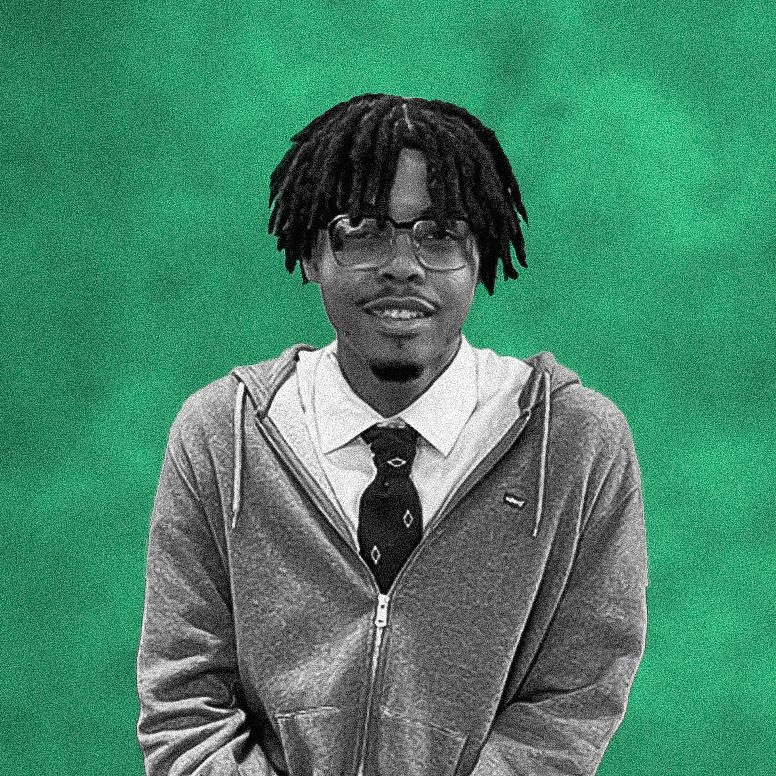
“You wont ever regret anything if you don’t do anything.”
ARTIST STATEMENT
Elijah Cooper has a passion for Graphic Design, Illustration, Animation, Painting, and Video Games. Growing up, Elijah often spent his time drawing, painting, and playing video games, which naturally led him to pursue a career in the digital arts. Throughout his studies in DGMA, Elijah has expanded his skills and explored various creative tools, learning Adobe programs like Illustrator, Photoshop, and InDesign, as well as 3D software such as Blender, Unreal Engine, and Maya. He also picked up Clip Studio Paint, which he is using for his animation thesis project. Looking ahead, Elijah aspires to work in Animation, Illustration, 3D Modeling, and Graphic Design, with Animation being his largest interest. Elijah loves the magic of bringing ideas to life and immersing people in new worlds through movement and storytelling. Elijah’s current project explores black representation in the horror genre through animation by focusing on a black protagonist who resists the usual victim narrative. Elijah challenges traditional horror conventions while developing his storytelling and animation skills. This short contributes to the push for more complex and empowered black characters in horror.
THESIS STATEMENT
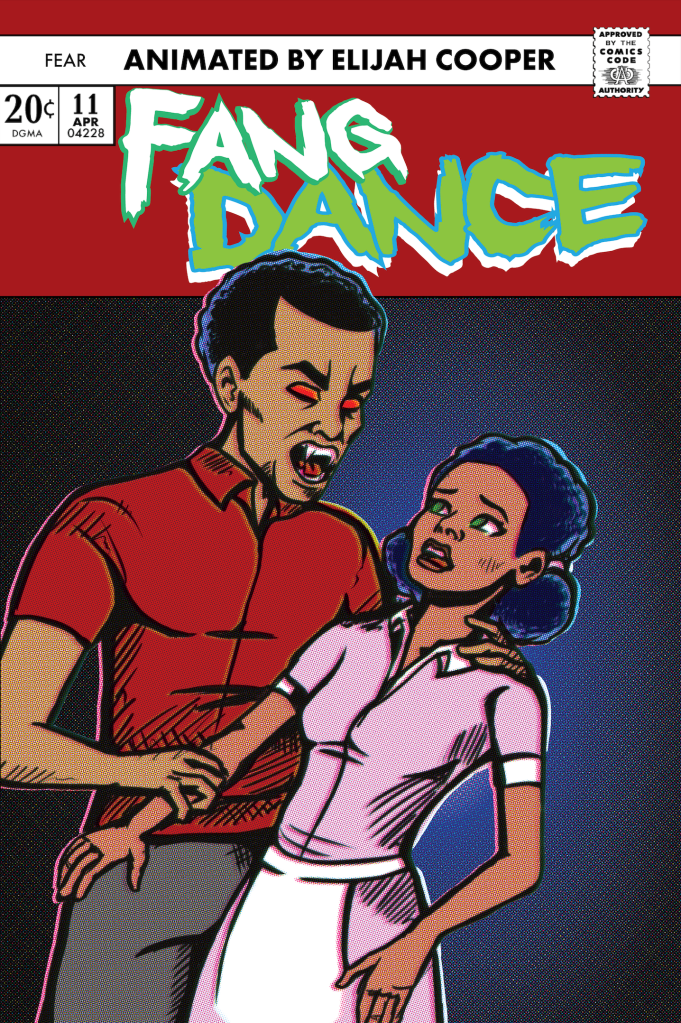
My project, Fang Dance, addresses the lack of Black representation in horror media by creating an animated short with Black characters at the forefront. Black characters in horror have long been confined to tropes like the “Sacrificial Black Character” or the “Black Best Friend,” but films such as Blacula, Ganja & Hess, and Get Out have challenged these norms by blending horror with social commentary. I was first drawn to this idea while working on a title sequence for Ganja & Hess, a 1973 film that reimagines vampire mythology through identity and spirituality. That project made me realize how horror can be used for cultural storytelling, leading me to develop my own animated short that challenges genre expectations. To bring this vision to life, I handled concept development, scriptwriting, storyboarding, character design, animation, and sound design using Adobe Photoshop, Blender, Clip Studio Paint, and After Effects. I took inspiration from 1960s horror suspense comics, incorporating high-contrast shading, thick inking, and bold linework to enhance the eerie atmosphere. The short follows Judith, a Black waitress who encounters a vampire after her shift. Unlike the stereotypical disposable Black victim, Judith fights back, challenging the trope of helplessness. Animating this project was a major learning experience. I improved my skills in composition, keyframing, in-betweening, and character consistency. The biggest challenge was animating Judith on roller skates, as the small wheels made motion feel tricky. Despite the difficulties, seeing it all come together reinforced my passion for animation and storytelling. This project is a step toward stronger Black representation in horror, proving that Black characters can be more than sidekicks or victims; they can be heroes who shape their own story.
PROJECT WORK
 PVAMU Digital Media Arts Class Of 2025